

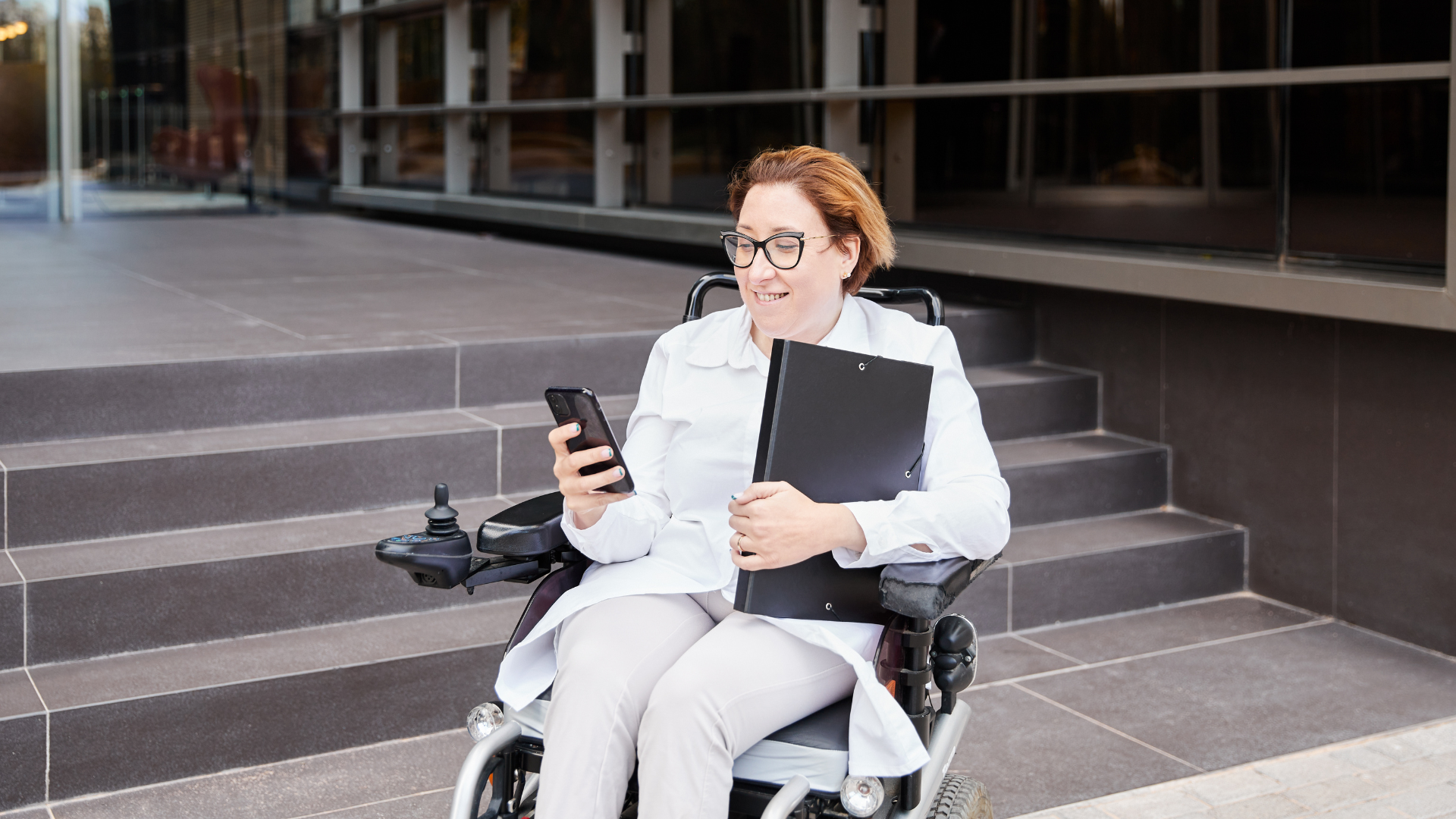
Choosing a wheelchair for someone with spina bifida isn’t always as simple as picking between a few models. Whether you’re trying to get an understanding of what options are out there or what might make sense long-term, here’s our team of Assistive Technology Professionals’ breakdown of what to know.
Key Takeaways:
- Mobility needs vary depending on which type of spina bifida a person has and where along the spine the defect is.
- People with spina bifida typically need custom seating and specialized features.
- Secondary complications and the natural aging process can shift what kind of mobility equipment works best.
What Is Spina Bifida?
Spina bifida is a birth defect that occurs when the spinal column doesn’t fully close during fetal development. It’s one of the most common neural tube defects in the United States, and its effects can range from barely noticeable to significant neurological and physical complications, depending on the severity.
The exact cause of spina bifida isn’t fully understood yet; however, researchers have identified several risk factors, including a family history of neural tube defects, low folic acid intake during early pregnancy, maternal diabetes, obesity, and certain medications.
Most Common Types of Spina Bifida
Not all cases of spina bifida look the same. There are three main types: myelomeningocele, meningocele, and spina bifida occulta. It’s important to note that these aren’t considered distinct, separate disorders; they’re merely different classifications categorized by degrees of severity of the same underlying condition.
Myelomeningocele
Myelomeningocele is the most severe form of spina bifida. In these cases, the spinal cord and surrounding nerves protrude through an opening in the spine, which leaves them exposed and vulnerable to damage. This form most typically requires the use of a manual wheelchair or more extensive mobility support, like a custom power wheelchair.
Myelomeningocele also, depending on the location of the defect along the spine, frequently presents with other complications such as hydrocephalus (an abnormal buildup of fluid on the brain), bladder and bowel dysfunction, and varying degrees of paralysis.
Meningocele
Meningocele is considered a moderate form of spina bifida because while the protective membranes surrounding the spinal cord still push through the spine, the spinal cord itself remains in its normal position, unlike myelomeningocele. Because the spinal cord is unharmed, most people grow up without
long-term neurological complications and have unimpaired reflexes and perception.
Spina Bifida Occulta
Spina bifida occulta is the mildest form, and is considered relatively common as it affects up to an estimated 10 to 20 percent of the general population, most of whom never know they have it. This form of spina bifida usually only involves a small gap in one or more vertebrae, but the spinal cord and nerves are left unaffected. Consequently, most people live their lives without experiencing symptoms or needing treatment.
Do People with Spina Bifida Use Wheelchairs?
The short answer is that it depends on the type of spina bifida and where along the spine the defect is located. As mentioned above, people with myelomeningocele, particularly when the opening is higher on the spine, are much more likely to have weakness or paralysis in the lower limbs, which means they’ll likely need to rely on a wheelchair as their primary means of getting around.
That said, no two diagnoses are exactly the same. For instance, some people with myelomeningocele are ambulatory and may be able to walk short distances with only braces, but use a wheelchair for longer stretches or more demanding environments. Other people, on the other hand, may rely on a wheelchair full-time. Either way, an assistive technology professional (ATP), can help determine what makes the most sense for each person’s particular situation.
Types of Spina Bifida Wheelchairs
Manual Wheelchairs
A manual wheelchair may be a practical option if you have good upper body strength and endurance. Ultra-lightweight manual chairs are typically the best option for users who want to self-propel, since they put less strain on the shoulders and wrists over time.
Power Wheelchairs
Power wheelchairs are usually the better fit for individuals with higher-level lesions or those who find that manual propulsion is no longer sustainable. Group 2 power wheelchairs may work in some cases, but a lot of people benefit more from Group 3 complex rehab (CRT) power wheelchairs, which allow for a much higher degree of customization, including power positioning features like tilt and recline and alternative drive controls if hand function is limited.
Custom Seating and Positioning
Regardless of the type of wheelchair, custom seating is particularly important for people with spina bifida. Because some individuals have reduced or absent sensation in the lower body, a poorly fitted seat could lead to pressure injuries, which can turn into open wounds and serious infections within as little as a few days. A seating evaluation by a RESNA-certified Assistive Technology Professional (ATP) can help figure out what combination of cushioning and back support will reduce that risk.
Is Spina Bifida a Progressive Disease?
No, spina bifida isn’t a progressive condition. The spinal defect that exists at birth doesn’t continue to worsen the same way conditions like amyotrophic lateral sclerosis (ALS) or multiple sclerosis (MS) do. However, that doesn’t mean secondary complications can’t develop over time.
One of the most common secondary complications is tethered cord syndrome (TCS). Almost all infants with myelomeningocele have a congenitally tethered cord (the spinal cord is attached to the tissues in the spinal canal) that’s released during their initial surgery to close the spina bifida defect. Symptomatic secondary tethered cord syndrome develops in 20% to 50% of cases later in life because of the scar tissue that forms at the site over time. This re-anchored scar tissue typically needs to be surgically re-released during the person’s childhood or adult years.
Mobility Changes Later in Life
It’s also not unusual for someone who walked independently throughout their childhood to find that a power wheelchair becomes a better fit for them in adulthood. This isn’t necessarily because their condition progressed, but because their body’s demands have changed after years of fatigue and musculoskeletal pain brought on by compensating for certain mobility limitations. That’s why regular check-ins with a healthcare team are so important, because they can catch these shifts early and adjust equipment accordingly.
How Common Is Spina Bifida?
Spina bifida occurs in approximately 1 in every 2,875 births in the United States, and more than 166,000 individuals are currently living with the condition. It’s consistently ranked as one of the most common permanently disabling birth defects in the country.
Wondering If You Qualify for a Power Wheelchair? We Can Help Answer Any Questions!
If you or someone you know is living with spina bifida and trying to figure out which mobility options make sense, our team is here to help with everything from insurance paperwork to helping patients to see if they qualify for power wheelchair solutions.
Have questions? Freedom Mobility works with individuals and families throughout California. Feel free to give us a call at 800-980-5696 or contact us online to learn more today!
July 8, 2026 by Freedom Mobility
Choosing a wheelchair for someone with spina bifida isn’t always as simple as picking between a few models. Whether you’re trying to get an understanding of what options are out there or what might make sense long-term, here’s our team of...