

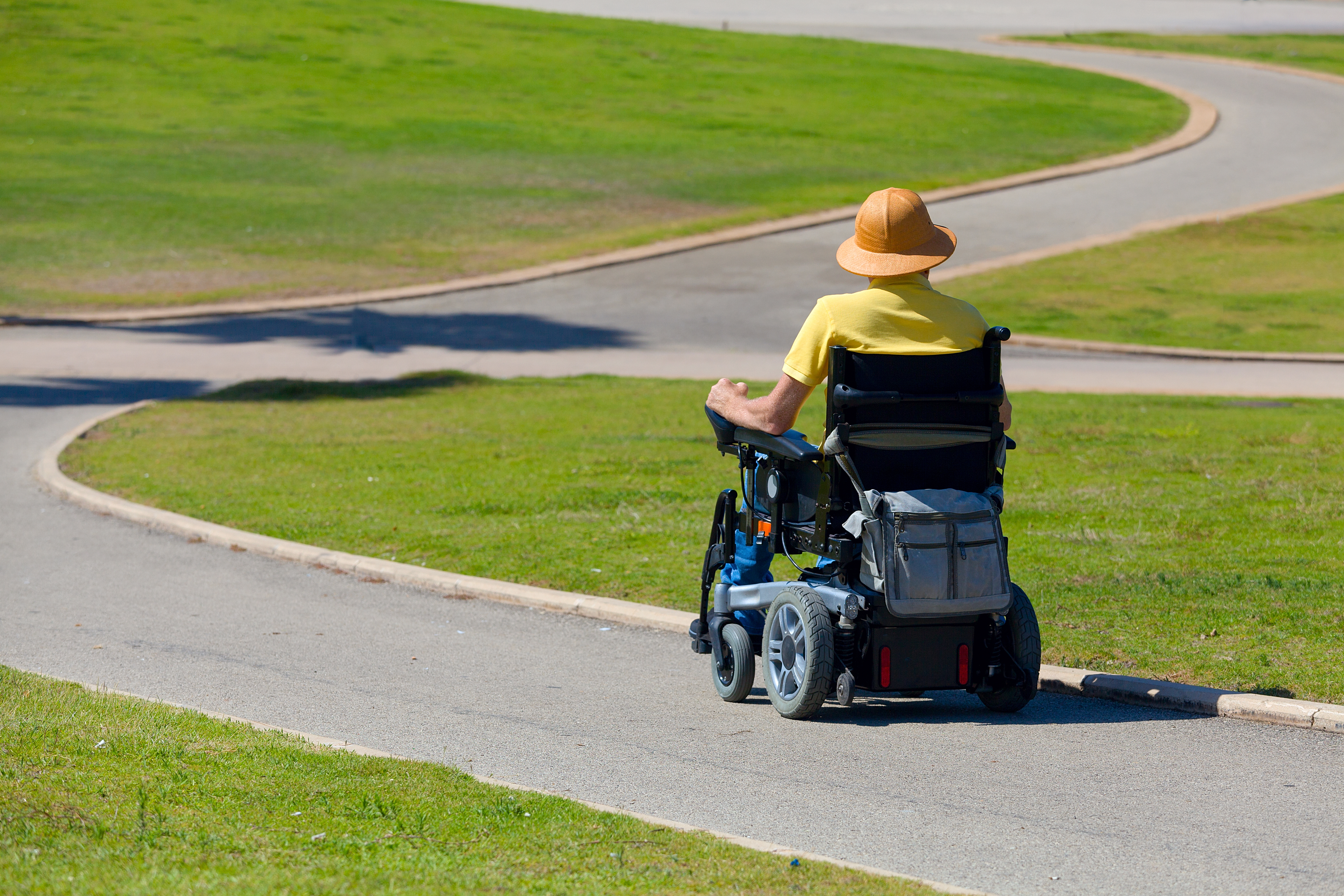
Whether you have a sloped driveway or live somewhere with hills, choosing a power wheelchair will mean more than just picking the most comfortable option; you’ll also need to consider how well it can handle the ground you use every day. Here’s what you need to know.
Key Takeaways:
- Most standard electric wheelchairs handle inclines between 6 and 10 degrees, though complex rehab power chairs can sometimes manage steeper grades depending on the model.
- Motor power and torque are what matter the most for climbing, but battery health and drive configuration also factor in.
- Descending safely usually comes down to speed control, body position, and approaching slopes straight on.
What Is the Typical Incline Limit for an Electric Wheelchair?
Most standard wheelchairs are rated to handle inclines between 6 and 10 degrees, which translates to roughly a 10% to 18% grade. That covers the vast majority of everyday situations, whether it’s an ADA-compliant ramp (which usually max out at about 4.8 degrees) or a residential driveway. That said, some complex rehab power chairs can sometimes handle up to 12 degrees or more, though it depends on the specific model.
The incline rating is usually listed in the user manual or product specs. That number reflects the chair’s tested performance under typical load conditions on a dry, solid surface, so keep in mind that real-world performance may vary.
What Factors Affect Uphill Performance?
Several things can affect how well power wheelchairs can handle hills, and they don’t all have to do with the chair itself.
Motor Power and Torque
Motor power is the most obvious factor. Higher-wattage motors generate more torque, which is what drives the wheels up an incline. A chair with dual motors will typically perform better on hills than a comparable single-motor model, since the load is distributed between two drive systems.
Torque matters more than raw speed when it comes to climbing. A wheelchair that moves quickly on flat ground may actually bog down on a slope if the motor isn’t tuned for it.
User Weight and Total Load
Every electric wheelchair has a maximum weight capacity. A user near the top of the chair’s weight limit will put more demand on the motor when climbing, which can affect the amount of steepness the chair can handle and, also, drain the battery faster. Any items you’re carrying in a bag or basket count too.
Battery Charge and Health
Climbing draws a lot more power than rolling on flat ground. A battery that’s at 50% charge may be able to handle a moderate slope, but the same can’t always be said for weak or aging batteries. Always start a trip on a full charge if you know you’ll be traversing hills.
Surface Type
Hard, dry surfaces like concrete and asphalt usually give the wheels the traction they need to climb without issue. Loose gravel or soft soil, on the other hand, may give you a hard time. A chair that’s rated for a 10-degree incline on a paved surface might struggle on a 7-degree that’s covered in wet grass.
Type of Electric Wheelchair
Not all power chairs are the same, and the type you have will play a partial role in how it handles inclines.
- Standard Folding and Portable Electric Wheelchairs: Standard electric wheelchairs are primarily designed for flat, indoor surfaces and light outdoor use. They can handle inclines in the 6 to 8-degree range pretty comfortably, but may slow or stop altogether on steeper grades. Their motors are sized strictly for everyday use.
- Mid-Wheel Drive Power Wheelchairs: Mid-wheel chairs offer the tightest turning radius of the three types of motorized wheelchair drive types, but they’re not always the best option for uneven terrain or steep slopes because their rear anti-tip wheels may engage on inclines. This type of wheelchair is generally suited for indoor use and moderate outdoor use only.
- Rear-Wheel Drive Power Wheelchairs: Rear-wheel drive chairs are more stable on inclines than mid-drive models, since the weight distribution keeps the front of the chair grounded. Some models can perform on slopes up to 10 degrees or more.
- Front-Wheel Drive Power Wheelchairs: These chairs can handle some terrain types, but they’re typically a little less stable climbing steep grades because the drive wheels are in the front, which changes the chair’s weight distribution on inclines.
- Complex Rehab Power Wheelchairs: Group 3 chairs, as mentioned above, are usually the most capable when it comes to inclines since they’re built with more powerful motors and, generally, more sophisticated electronics, too. Many are also configured with specific drive settings for terrain performance.
What Drive Type Is Best for Hills?
Generally speaking, rear-wheel drive tends to be the most reliable configuration for climbing hills. The drive wheels are at the back, and on an incline, the user’s weight shifts slightly rearward, which can actually improve traction. Front-wheel drive can also work on gentle slopes, but it’s not as equipped for steeper grades because the chair’s weight loads the rear wheels rather than the drive wheels.
If hills are a regular part of your environment, a rear-wheel drive chair or another type of complex rehab wheelchair may be worth discussing with your ATP or equipment provider.
Can I Descend Steep Slopes in a Power Chair?
Yes! Most electric wheelchairs use electromagnetic brakes that engage automatically when the joystick is released, which will help control the chair on the way down. The risk associated with going downhill is less about motor power and more about control; specifically, whether the braking system can hold the chair at a manageable speed on the slope. Going too fast on a descent could make the chair hard to steer and, potentially, make you tip forward.
It can also help to approach the slope straight on rather than at an angle. If you can, lean forward slightly to keep the chair stable and prevent the rear from lifting.
What Should I Do If I Lose Traction?
If your chair starts to slip and spin out on a slope, release the joystick and let the brakes engage. Most power chairs will hold their position once the joystick is centered, as long as the slope isn’t beyond the chair’s rated grade. Don’t try to gun the motor; that usually makes matters worse.
If you’re on a wet or loose surface, steer toward firmer ground if you can instead of continuing straight up. Keep the chair straight and let it come to rest rather than trying to steer if it starts sliding backward.
Not Sure What All Your Wheelchair Can Handle? We Can Answer Your Questions
Are you wondering whether your current chair is up for climbing hills, or whether a different setup might serve you better? Freedom Mobility works with patients across California, and our RESNA-certified Assistive Technology Professionals can evaluate your needs and make sure you’re in the right equipment for your specific lifestyle.
Have questions for us? Give us a call at 1-800-980-5696 or contact us online to get started.
September 23, 2026 by Freedom Mobility
Whether you have a sloped driveway or live somewhere with hills, choosing a power wheelchair will mean more than just picking the most comfortable option; you’ll also need to consider how well it can handle the ground you use every day. Here’s what...