

If you've spent time working in rehabilitation, occupational therapy, special education, or a related field and you're looking for a way to formalize your expertise in assistive technology, the ATP certification is probably already on your radar. It's the most recognized credential in the field, and for a lot of people, it's the natural next step after years of hands-on work with clients and equipment.
Here's a clear breakdown of what the path looks like, from eligibility to exam day and beyond.
Key Takeaways:
- ATP certification is granted through RESNA and requires a combination of education and direct, paid work experience with assistive technology consumers.
- The amount of work experience that’s required depends on your degree level and field of study, ranging from 1,000 hours for a master’s degree in a rehab science to 6,000 hours for a high school diploma or GED.
- The certification is valid for two years and must be renewed through continuing education and documented work experience.
What Is an Assistive Technology Professional?
An Assistive Technology Professional (ATP) is a certified specialist who evaluates people for assistive technology and helps recommend equipment and solutions based on their individual functional needs.
What Do ATPs Do?
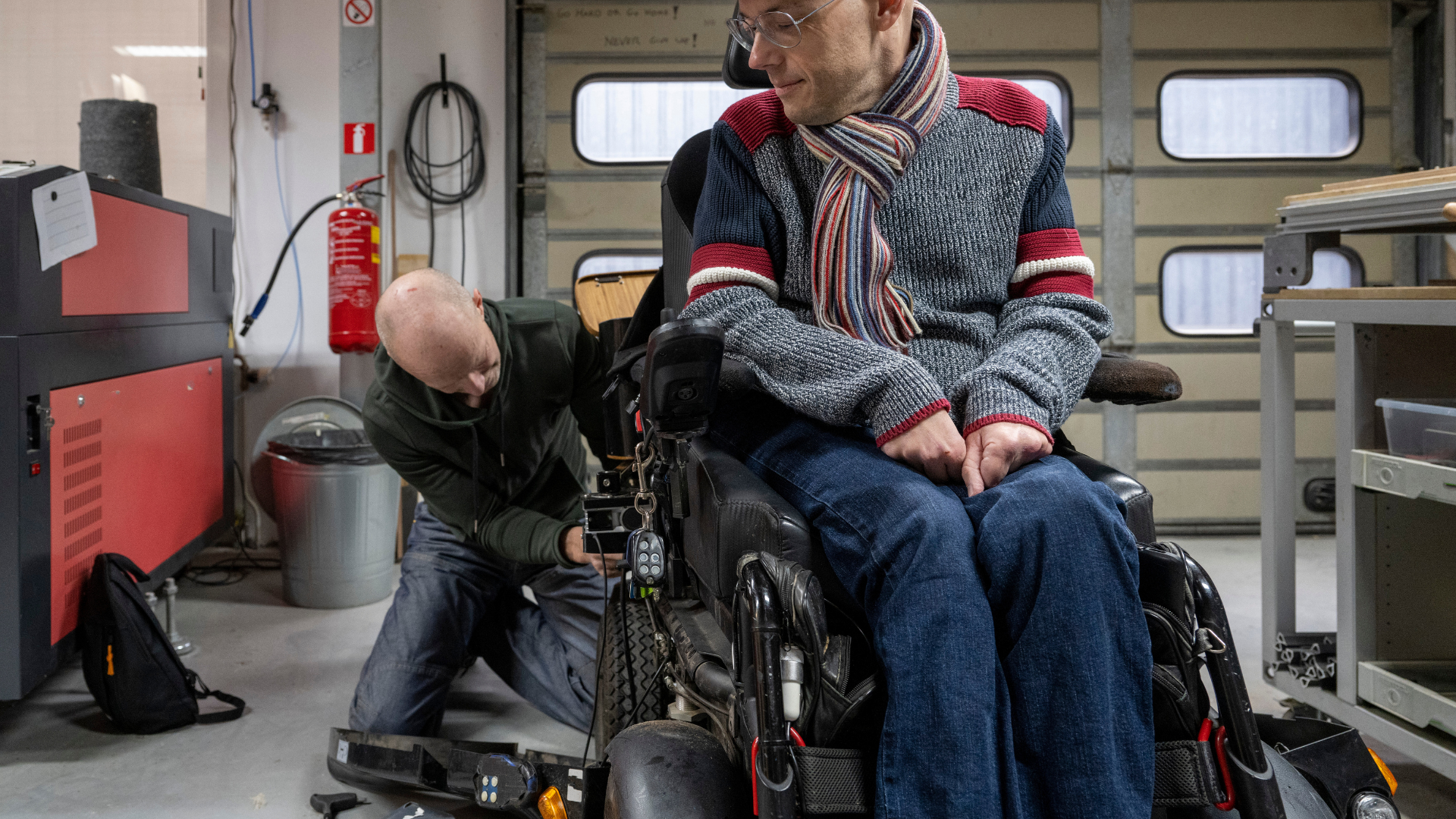
ATPs work directly with clients, caregivers, physicians, and equipment suppliers to assess what kind of assistive technology will actually work for someone’s life, not just in a clinical setting. That includes evaluating mobility needs, recommending and fitting equipment, providing training, and handling most of the documentation required for insurance approval.
How to Become an Assistive Technology Professional
Becoming an ATP means meeting the eligibility requirements set by the Rehabilitation Engineering and Assistive Technology Society of North America (RESNA), applying to take the certification exam, passing it, and maintaining the credential through ongoing education and work experience. Each of those steps has its own requirements, and the specifics vary depending on your educational background.
What Qualifications Do I Need to Become an Assistive Technology Professional?
Eligibility for the ATP exam is based on a combination of your degree level, your field of study, and the number of hours of paid, direct-service work experience you’ve accumulated. Here’s how it usually breaks down:
- Master’s degree or higher in a rehab science or special education: 1,000 hours of work experience within the past six years.
- Bachelor’s degree in a rehab science or special education: 1,500 hours within the past six years.
- Bachelor’s degree in a non-rehab science field: 10 hours of AT-related training plus 2,000 hours of work experience within the past six years.
- Associate degree in a rehab science: 3,000 hours within the past six years.
- Associate degree in a non-rehab science field: 20 hours of AT-related training plus 4,000 hours within the past six years.
- High school diploma or GED: 30 hours of AT-related training plus 6,000 hours within the past ten years.
Rehab science, for RESNA’s purposes, includes occupational therapy, physical therapy, speech-language pathology, audiology, nursing, medicine, vocational rehabilitation, biomedical or rehabilitation engineering, prosthetics and orthotics, and recreation therapy, among others.
Work Experience
Work experience must involve direct service to consumers and can include evaluations, equipment fitting and adjustment, training for clients and caregivers, and product development that involves direct consumer participation. Administrative work, billing, and paperwork processing don't count toward the requirement.
Do You Have to Be Resna-Certified to Become an ATP?
No, RESNA membership isn’t required to sit for the ATP exam. Anyone who meets the eligibility requirements can apply. That said, RESNA members pay less for the application, since the exam application is free for members and $125 for non-members.
What Is the Exam Process for Becoming an ATP?
Once you’ve confirmed you meet the eligibility requirements, here’s how the process typically works:
Step 1: Submit your application. You’ll complete and submit an application along with supporting documents verifying your education and work experience. As mentioned above, non-members pay a $125 application fee; RESNA members pay nothing for the application itself.
Step 2: Wait for approval. RESNA will review your application and notify you by email of your result. If your application is approved, you’ll receive a Prometric eligibility ID and instructions for scheduling your exam. They should reach out to you if anything is missing or unclear on your application.
Step 3: Pay the exam fee and schedule. The exam fee is $625. Once payment is made, you’ll have a 90-day window to schedule and complete your exam at a Prometric testing center. There are hundreds of Prometric locations across the country and internationally, and the exam is offered year-round.
Step 4: Take the exam. The ATP exam is computer-based and covers assistive technology practice, human factors, AT assessment and evaluation, and technology implementation. Preliminary results are provided immediately at the end of the exam. A passing score is 600 on a scaled score that ranges from 200 to 800.
Step 5: Receive your certificate. If you pass, you can expect to receive your ATP certificate via email within one to two weeks.
How Long Does It Take to Become an Assistive Technology Professional?
It mainly comes down to where you’re at in your career. Someone who’s been doing direct AT work for years may already meet the experience requirement and just needs to go through the application and exam process, which typically adds a few weeks to a couple of months on top of that. Someone earlier in their career will need to build up the required hours first, which is usually the longest part of the timeline by far.
Once you’re eligible and ready to apply, most candidates can get through the application, scheduling, and exam itself within a few months.
Frequently Asked Questions
What Traits and Characteristics Make for the Best ATPs?
In short, the role requires a mix of clinical knowledge, technical expertise, and real-world problem solving. Good ATPs are typically described as strong listeners who can translate what a client describes about their daily life into practical equipment decisions.
They’re also comfortable navigating insurance documentation and keeping up with a field where technology is always evolving. An interest in both the human and technical side of the work also tends to go a long way.
What Is the Job Outlook for ATPs?
Demand for assistive technology services has grown steadily alongside the aging population and increased awareness of disability-related services. ATPs can work across a pretty wide range of settings, including hospitals, rehabilitation centers, schools, equipment suppliers, and private practice, which gives the credential board applicability.
Overall, the Bureau of Labor Statistics projects continued growth in the healthcare and rehabilitation fields, and ATPs with specialized expertise in complex rehab technology are particularly sought after.
Can I Retake the ATP Exam If I Don’t Pass?
Yes. Candidates can take the ATP exam up to three times within 365 days, with a required 90-day waiting period between each attempt. The retake fee during that initial 365-day period is $300, which is reduced from the standard $625 exam fee. If you don’t pass after three attempts, you’ll need to wait 365 days from your third attempt before reapplying as a new candidate and restarting the process.
Do I Need to Renew my ATP Certification?
ATP certification is valid for two years and must be renewed at the end of each cycle. Renewal requires documentation of ongoing work experience and continuing education hours relevant to assistive technology. If you hold multiple RESNA certifications, your renewal dates are linked, so you can renew all of them at the same time without separate education requirements for each one, as long as at least half of your training is relevant to all the certifications you hold.
How Can I Stay Updated on Industry Trends?
RESNA is the primary professional organization for ATPs, and staying connected there is one of the most practical ways to keep current. Some ATPs also stay active in specialty groups focused on specific areas like seating and mobility, augmentative communication, or cognitive access technology.
Have Questions? Get In Touch with Our RESNA-Certified Team
If you’re a patient, caregiver, or clinician with questions about working with an Assistive Technology Professional, our team is always more than happy to help! Contact us online today or call 1-800-980-5696 to learn more or schedule a consultation.
June 24, 2026 by Freedom Mobility
If you've spent time working in rehabilitation, occupational therapy, special education, or a related field and you're looking for a way to formalize your expertise in assistive technology, the ATP certification is probably already on your radar. It's...