

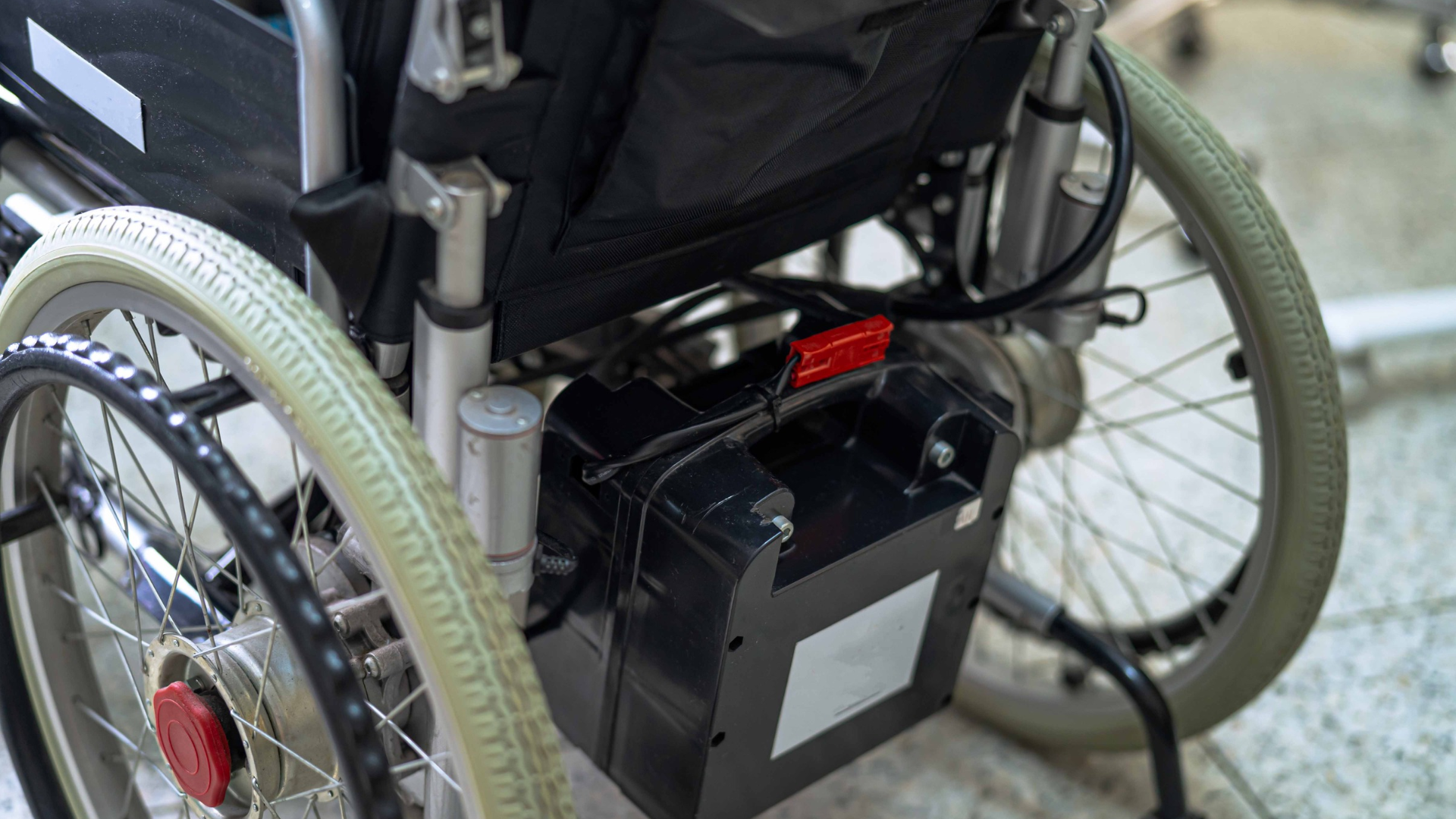
The short answer is no, not the way you’d jumpstart a car. Wheelchair batteries are smaller and have protective circuitry that a jumpstart would bypass entirely.
The good news is that a dead wheelchair battery isn’t necessarily a dead end. Read more about what might actually be going on, and what to do about it below.
Key Takeaways:
- Jumpstarting a wheelchair battery the way you’d jumpstart a car can cause serious, potentially irreversible damage.
- A dead battery can typically be recovered with the correct charger and a little patience.
- Charging after every use is the best way to avoid a dead battery in the first place.
Why Can’t You Jumpstart a Wheelchair Battery Like a Car?
Wheelchair batteries aren’t built to handle the kind of sudden electrical surge that comes with jumpstarting a car battery. Power wheelchairs use much smaller batteries, and the charging process is regulated by the chair’s electronics and the charger itself. That means, trying to force power the battery from an outside source could overload the system or even harm your wheelchair itself.
In some cases, it can also create a safety risk, especially if your chair’s battery is already damaged or almost completely depleted.
Does It Matter What Type of Battery Your Wheelchair Uses?
Quite a bit. Most power wheelchairs use one of two battery types. Sealed lead-acid batteries, including AGM and gel varieties, tend to be the most common. That said, lithium batteries have become increasingly popular because they’re lighter and last longer.
Why You Shouldn’t Jump Sealed Lead-Acid Batteries
Sealed lead-acid batteries are sometimes listed as “technically” jumpable, but the risk of damage makes it not even worth attempting. AGM and gel batteries are sealed, so the pressure from a jumpstart could end up rupturing the internal components.
Why You Shouldn’t Jump Lithium Batteries
Lithium batteries should never be jumpstarted under any circumstances. Their battery management system exists specifically to regulate charging current, and bypassing it could cause permanent failure or create a fire hazard.
What Should You Do When Your Wheelchair Battery Dies?
Using the charger that came with your wheelchair, or one rated for your specific battery’s voltage and chemistry is a depleted battery’s best chance of recovery with a slow, steady charge. Completely drained batteries may not show any signs of charging right away, so leave it connected for at least 10 to 15 minutes before assuming it’s not working.
What If the Battery Isn’t Responding At All?
First, make sure the outlet you’re using actually has power by plugging in something else. If it’s not the outlet, make sure the charger cable doesn’t have any fraying and the battery terminals are free of corrosion.
If you have access to a multimeter, check the terminal voltage to see whether the battery has anything left. A reading close to zero usually means severe deep discharge, and at that point the battery may not be able to recover on its own; this is when it’d probably be best to reach out to a mobility specialist.
Can a Dead Wheelchair Battery Be Recovered?
Sometimes! A battery that’s been fully depleted but isn’t physically damaged can typically be brought back with a long, low-current charge using the correct charger. In fact, some smart chargers actually have a recovery mode made for these types of situations.
What usually can’t be recovered is a battery that’s been sitting discharged for any extended period of time. Lead-acid batteries develop sulfation over time when they’re left without a charge, which reduces their capacity and eventually kills them. While less common, lithium batteries may experience something similar if the cell drops below a certain voltage threshold. Signs of this generally include:
- Battery swelling or leaking
- Strong chemical smell
- A battery that charges but drains almost immediately
Replacement is the only real option after any of these.
How Can You Prevent Your Wheelchair Battery from Dying?
First and foremost, charge your wheelchair after every use, even if the battery isn’t particularly low. Wheelchair batteries actually tend to last longer when they’re not routinely being run all the way down. Most manufacturers recommend plugging your wheelchair in overnight rather than topping off in short sessions throughout the day.
You should also avoid leaving your wheelchair sitting with a dead or near-dead battery for days at a time, especially if it’s a lead-acid model. The longer a depleted battery sits, the harder time it’ll have recovering.
Frequently Asked Questions
Is It Safe to Use a Car Battery Charger on a Wheelchair Battery?
No, it’s not. As mentioned above, car battery chargers are designed for much larger batteries, which means they deliver more current than a wheelchair battery can even tolerate. You should only use a charger that’s rated specifically for your wheelchair battery’s voltage and chemistry. Otherwise, you risk overheating the battery cells or even harming your wheelchair’s electrical system.
How Long Does It Take to Charge a Dead Wheelchair Battery?
A critically low battery can take 8 to 14 hours to reach a full charge. Trying to rush the process by using a faster charger won’t help and might even shorten your battery’s life over time.
If the battery isn’t responding at all after 15 minutes of charging, inspect the charger, outlet, and terminals before assuming the battery is dead.
When Should You Replace a Wheelchair Battery?
Most wheelchair batteries last 12 to 24 months with regular, everyday use. You might need a replacement soon if you notice any of the following:
- Noticeably shorter range per charge
- A battery that drains much faster than it used to or stops holding a charge even after a full charge cycle
- Physical damage like swelling or cracks
Can You Carry a Backup Wheelchair Battery?
Yes, it might be worth considering if you’re someone who relies on your chair throughout the day. Just make sure your backup battery is the correct voltage and model for your specific wheelchair.
Some wheelchairs also support portable power packs specifically designed for mobility devices, which can extend your range without having to make a full battery swap in the middle of the day.
Need Help With Your Wheelchair Battery? Our Team Can Help
Whether your wheelchair battery isn’t holding a charge or you’re not sure what’s going on with it, our California mobility specialists provide repairs services throughout the state. We can help with everything from battery testing to replacement and servicing even if you didn’t purchase your wheelchair from us originally.
Give us a call at 1-800-980-5696 or contact us to schedule a service appointment with one of our RESNA-certified technicians!
November 11, 2026 by Freedom Mobility
The short answer is no, not the way you’d jumpstart a car. Wheelchair batteries are smaller and have protective circuitry that a jumpstart would bypass entirely. The good news is that a dead wheelchair battery isn’t necessarily a dead end. Read...